

Both hands, every time
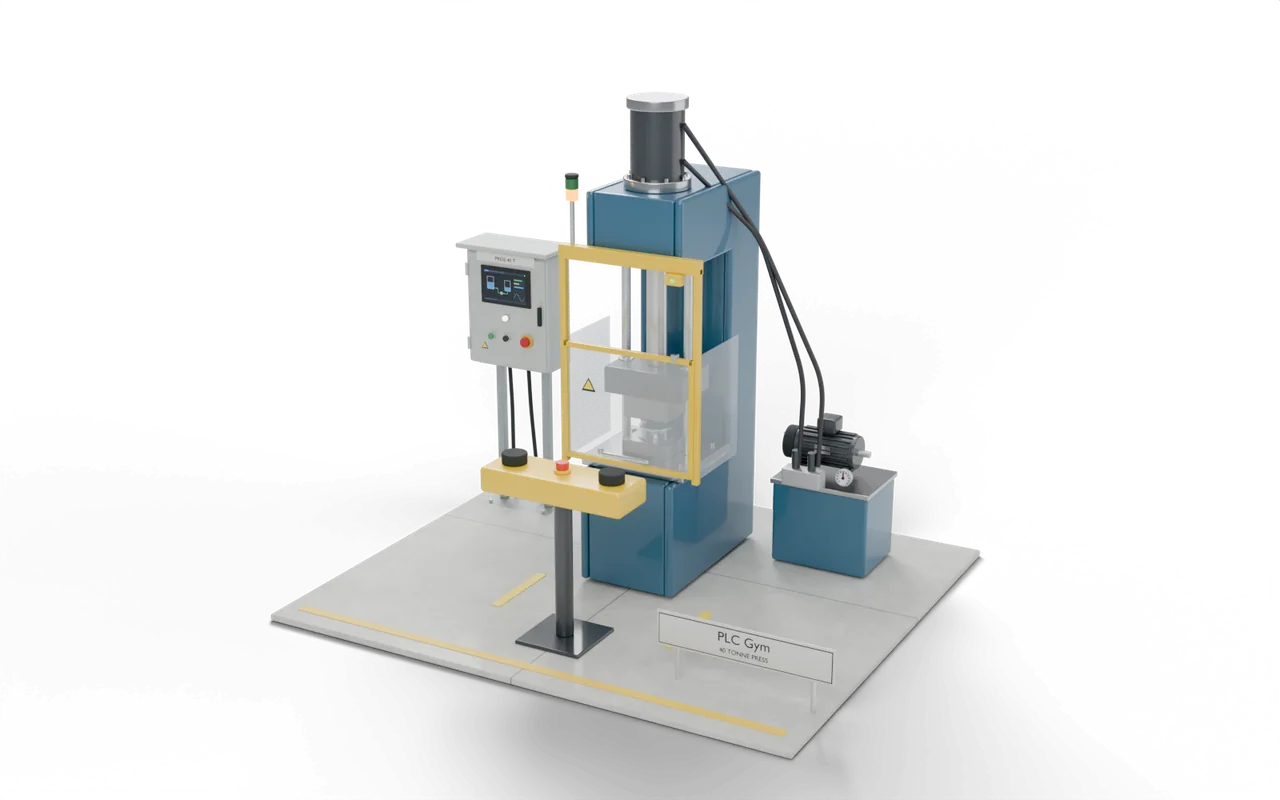
Write two-hand control for a press, with an interlocked guard.
Start a stroke only when both palm buttons are pressed within 0.5 s of each other, with the guard shut and the ram at the top. Return the ram if either hand lets go or the guard opens.
 Pro mission
A full stroke
Test 1 of 4LeftHandInputONRamDownValve: ON drives the ram down, OFF returns it upONReadyLampGreen lamp: ready for a strokeONPartCountCups drawn1- Level
- Applied
- Time
- About 30 min
- Reward
- +350 XP
- Rig
- 3D two-hand control press
- Siemens editors
- SCL, LAD
- Rockwell editors
- Structured Text, Ladder
- Course stage
- 27. Machine lab 2: memory, timing and sequences
What the tests check
- Both buttons within 0.5 s start a stroke; slower does not.
- Letting go of either button returns the ram.
- No stroke with the guard open; opening it mid-stroke returns the ram.
- Both buttons must be released before the next stroke.
- PartCount counts strokes that reach the bottom.
- Try it Use the buttons below the model and watch the rig respond.
- Test solution Every check runs on your code in one press.
- Replay If one fails, step through it one scan at a time to see why.
Where you’d see this on site
Every hand-loaded power press follows rules like these, set by EN ISO 13851 and checked by the insurer's inspector.
Without the 0.5 s window, one button can be taped down and the press run one-handed. Without the release rule, holding both buttons repeats strokes while the operator reaches in.
Presses are among the most dangerous machines in any factory. Two-hand control keeps the operator's hands on the console while the tools close, and an interlocked guard stops anyone reaching in.
- LoadGuard open, blank in
- Close guardInterlock made
- Two handsStroke downYou are here
- UnloadDrawn cup out
On a real site: places, parts and safety
- Metal pressing and deep drawing
- Riveting, staking and crimping stations
- Assembly presses in electronics and automotive
In real machines these rules are enforced by safety relays or a safety PLC, so a programming mistake cannot defeat them. Here you write them to understand why they exist.
Tying one button down to run with one hand is the classic way operators are hurt: that is why both must be released before the next stroke.
The sizes, timings and cutaways are teaching choices, not a drawing of any one real installation.
Next in the course
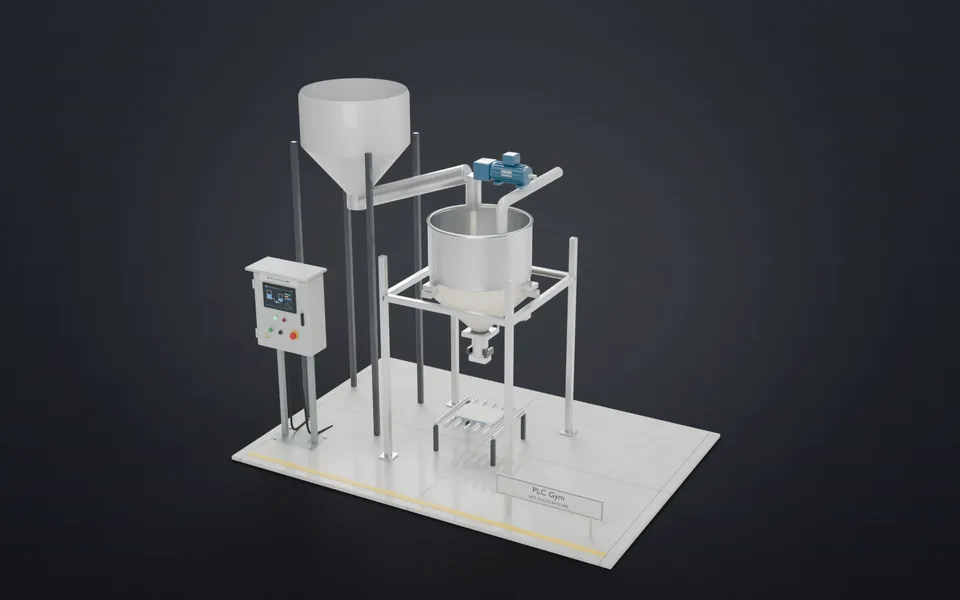 5025 kg, every sackFeed fast, then slow, stop early, and learn from every batch.Advanced · 40 min · +500 XP
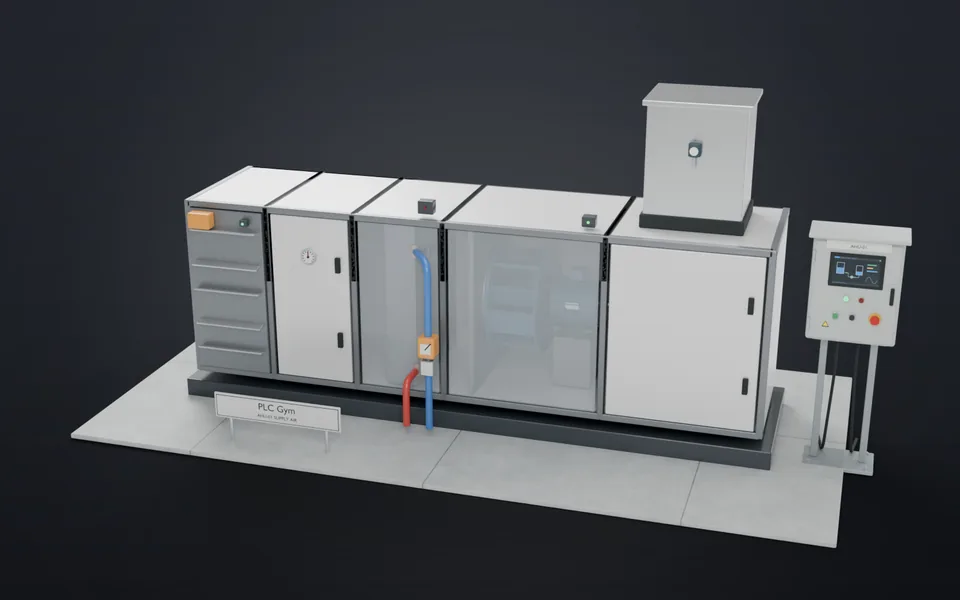 5121 °C, fan proven, coil safeStart an air handler in order and write its PI temperature loop.Advanced · 50 min · +600 XP
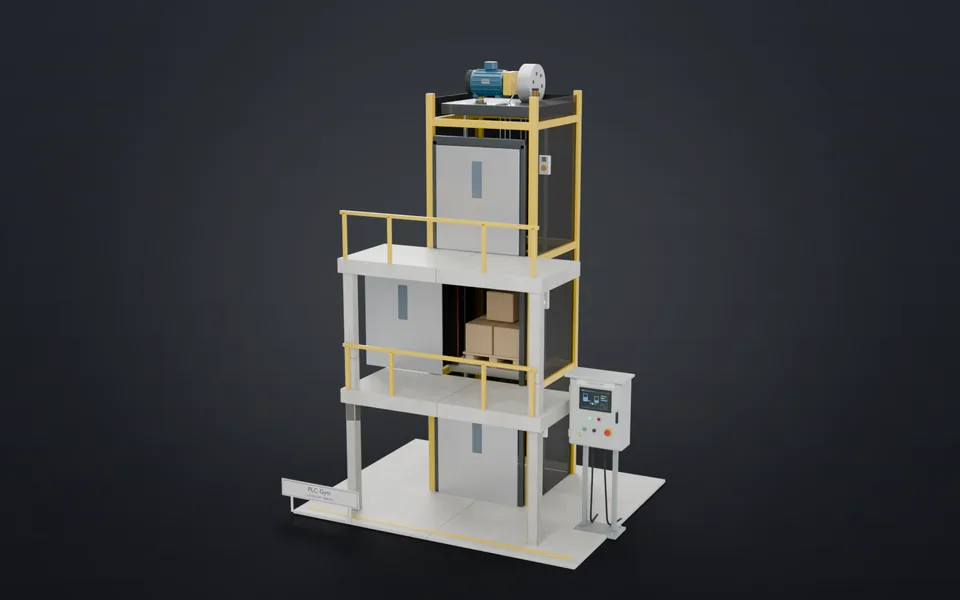 52Level, then openRun a three-stop goods lift: calls, two speeds, doors and a safety edge.Advanced · 50 min · +600 XP
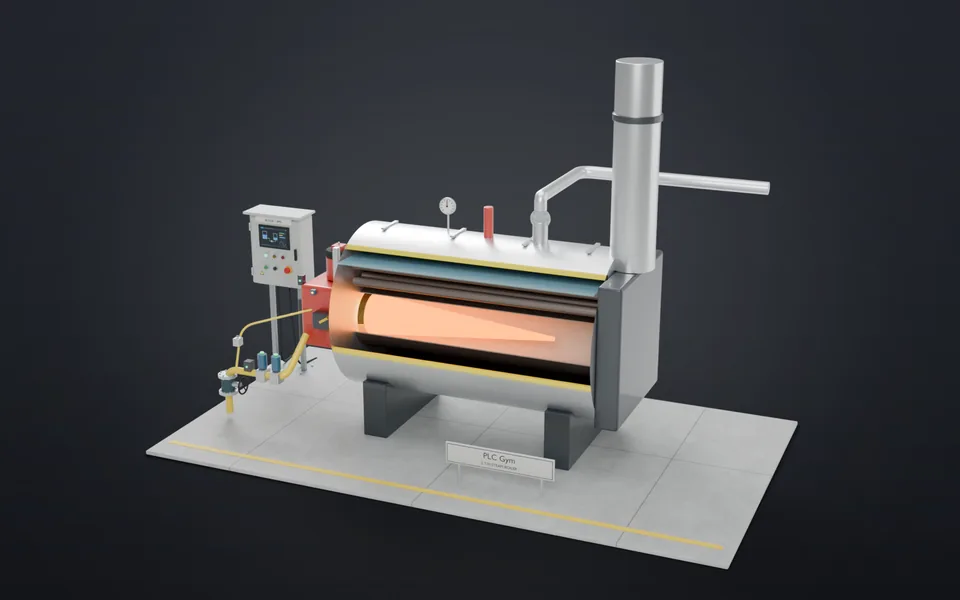 53Purge, prove, fireWrite a burner management sequence that locks out on any doubt.Advanced · 60 min · +750 XP