

Tall boxes off the line
Remember a box's height and push it at the right moment.
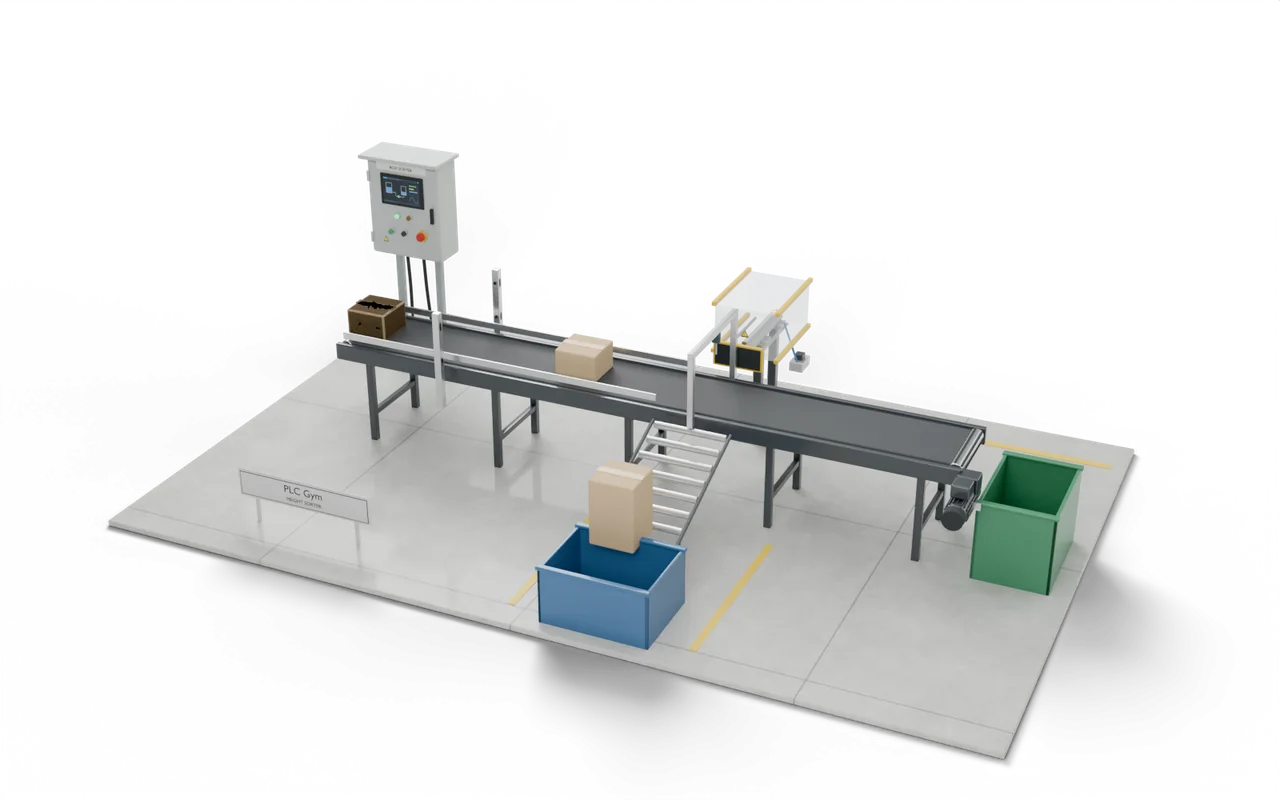
Run the belt from Start and Stop. Remember each tall box at the height check, push it off when it reaches the pusher, and count it.
 Pro mission
Start and stop the belt
Test 1 of 4StartStart the beltONStopInputOFFPusherHomeInputONConveyorRun the beltON- Level
- Applied
- Time
- About 25 min
- Reward
- +300 XP
- Rig
- 3D conveyor box sorter
- Siemens editors
- SCL, LAD
- Rockwell editors
- Structured Text, Ladder
- Course stage
- 27. Machine lab 2: memory, timing and sequences
What the tests check
- Start runs the belt; Stop stops it.
- A tall box is pushed when it reaches the pusher, not before.
- The pusher returns as soon as it reaches full stroke.
- Short boxes are never pushed, even straight after a tall one.
- TallCount goes up by one for each box pushed.
- Try it Use the buttons below the model and watch the rig respond.
- Test solution Every check runs on your code in one press.
- Replay If one fails, step through it one scan at a time to see why.
Where you’d see this on site
Parcel hubs sort by height, weight and barcode this way, fast enough that a late push hits the wrong box.
Push too early and the plate blocks the belt; too late and it clips the box or misses it. Forget to clear the memory and the next good box goes in the reject bin.
Parcel hubs and packing lines sort by size, weight or barcode. Here two photo eyes measure height and a pneumatic pusher knocks tall boxes down a chute. The box is measured in one place and pushed in another, so the controller has to remember it on the way.
- InfeedBoxes on the belt
- Height checkTwo photo eyesYou are here
- PusherTall boxes off
- BinsTall and short
On a real site: places, parts and safety
- Parcel and e-commerce hubs
- Packing lines rejecting over-height cases
- Bottling lines rejecting missing caps
A pusher can trap a hand against the belt rail. It sits behind fixed guards on a real line.
Tracking that loses count pushes the wrong box: real sorters check each reject arrives in the chute.
The sizes, timings and cutaways are teaching choices, not a drawing of any one real installation.
Next in the course
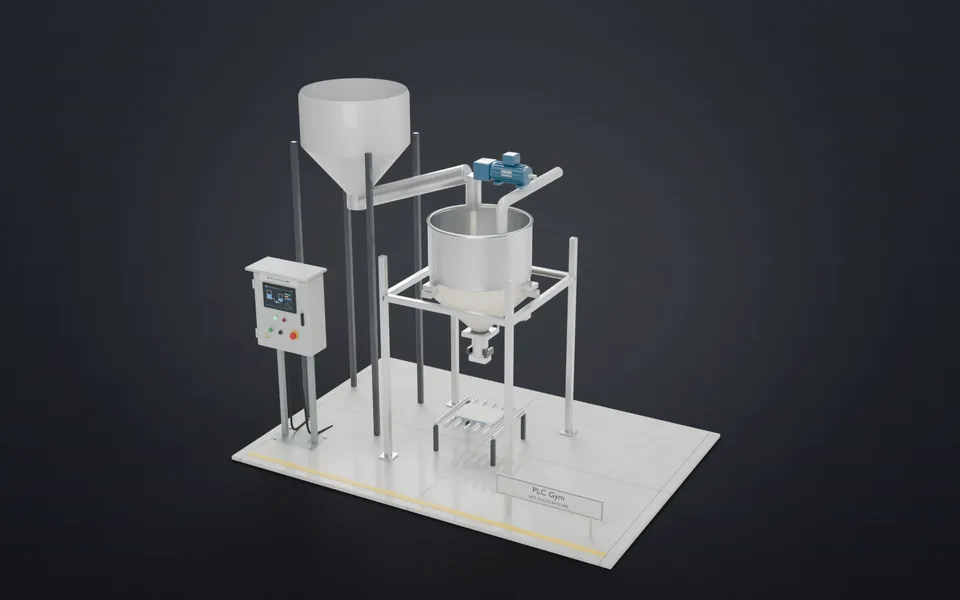 5025 kg, every sackFeed fast, then slow, stop early, and learn from every batch.Advanced · 40 min · +500 XP
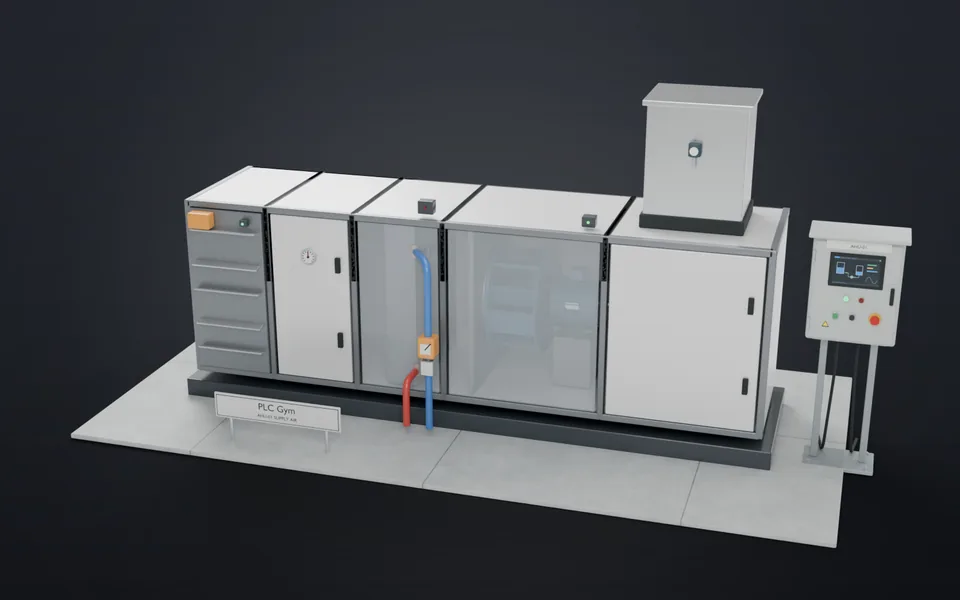 5121 °C, fan proven, coil safeStart an air handler in order and write its PI temperature loop.Advanced · 50 min · +600 XP
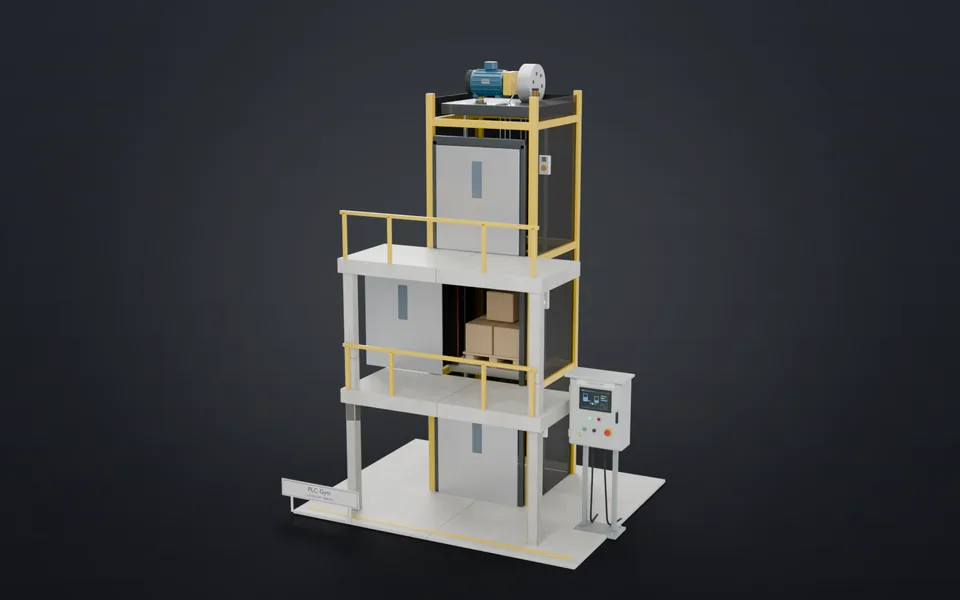 52Level, then openRun a three-stop goods lift: calls, two speeds, doors and a safety edge.Advanced · 50 min · +600 XP
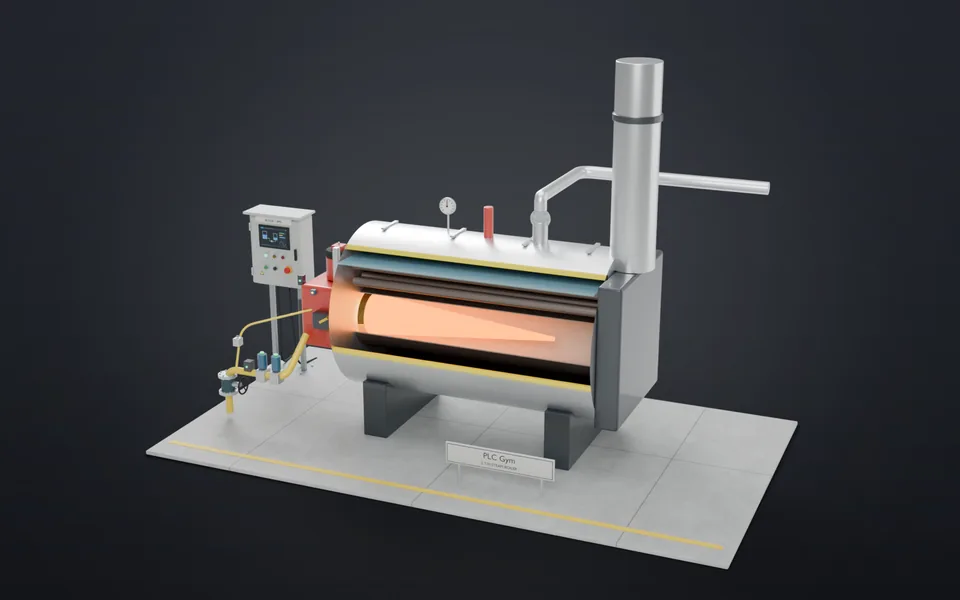 53Purge, prove, fireWrite a burner management sequence that locks out on any doubt.Advanced · 60 min · +750 XP