

One car at a time
Raise the arm for a ticket, lower it once the car is clear.
Raise the arm when a waiting car's driver presses for a ticket, show green once it is up, and lower it after the car has driven clear of the safety loop.
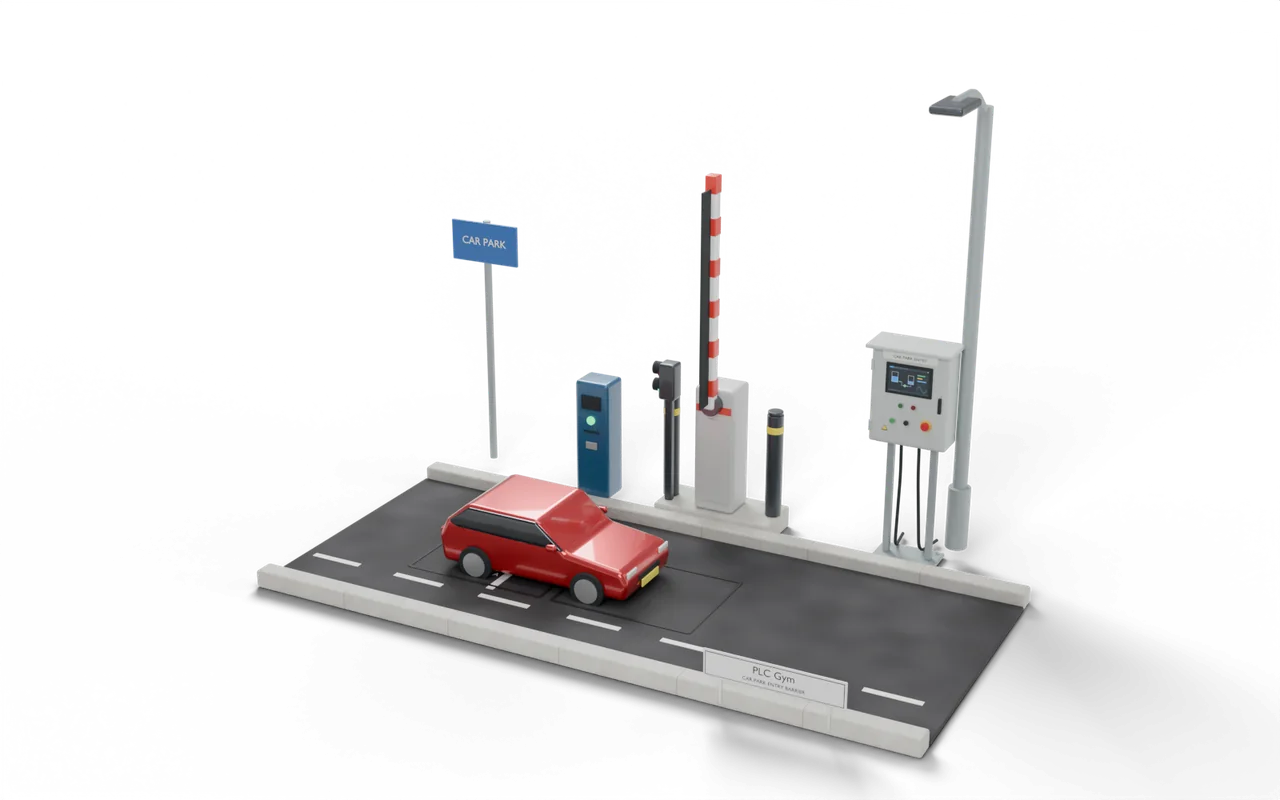 Pro mission
A car goes through
Test 1 of 3TicketButtonInputOFFEntryLoopCar waitingOFFSafetyLoopCar under the armOFFRaiseArmOutputOFF- Level
- Applied
- Time
- About 20 min
- Reward
- +300 XP
- Rig
- 3D car park barrier
- Siemens editors
- SCL, LAD
- Rockwell editors
- Structured Text, Ladder
- Course stage
- 26. Machine lab 1: real machines, clear rules
What the tests check
- A ticket press only counts with a car on EntryLoop.
- RaiseArm runs until ArmUp; LowerArm runs until ArmDown.
- GreenLight shows only while the arm is fully up and the car is going through.
- The arm lowers only after the car has left SafetyLoop and EntryLoop.
- A car on SafetyLoop while lowering sends the arm straight back up.
- RaiseArm and LowerArm are never ON together.
- Try it Use the buttons below the model and watch the rig respond.
- Test solution Every check runs on your code in one press.
- Replay If one fails, step through it one scan at a time to see why.
Where you’d see this on site
Every car park entry runs this sequence, thousands of times a day, usually on a small PLC or a dedicated barrier controller.
An arm that comes down on a car roof damages cars and leads to complaints and claims. The safety loop is there so the logic can prevent it.
Hospital, airport and office car parks use barriers like this all day. Loops of wire cut into the road detect the metal of a car. One loop says a car is waiting; the safety loop under the arm stops it coming down on a car that is still passing.
- Car arrivesEntry loop
- TicketDriver presses
- Arm upCar passesYou are here
- Arm downLane closed
On a real site: places, parts and safety
- Car parks and multi-storey garages
- Factory and depot gatehouses
- Toll plazas and ferry terminals
Never lower an arm while the safety loop detects a vehicle.
Real barriers add photocells and a pressure edge for pedestrians and cyclists, which loops cannot detect.
The sizes, timings and cutaways are teaching choices, not a drawing of any one real installation.
Next in the course
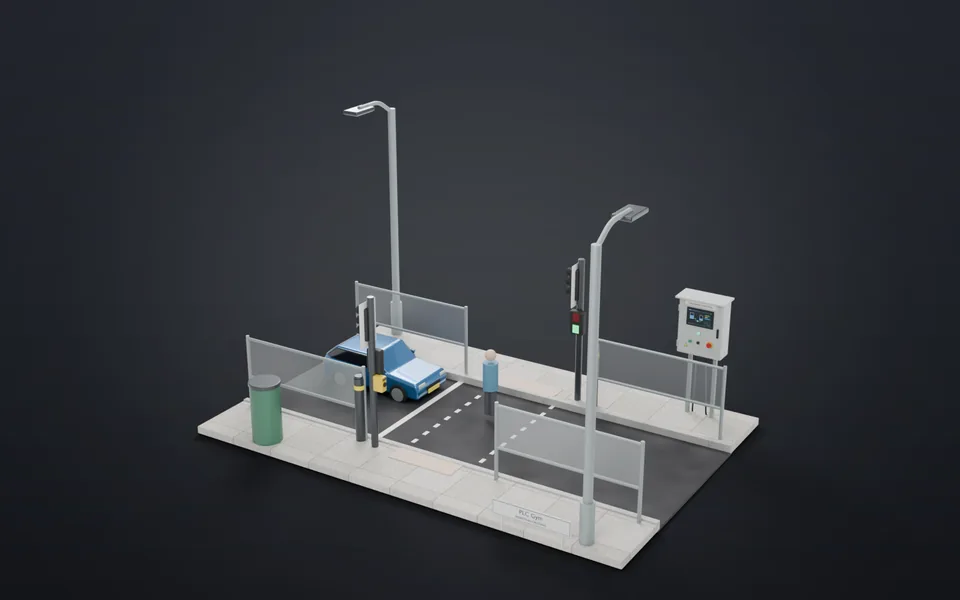 46Green figure, on timeRun a crossing's six stages with their timers.Applied · 30 min · +350 XP
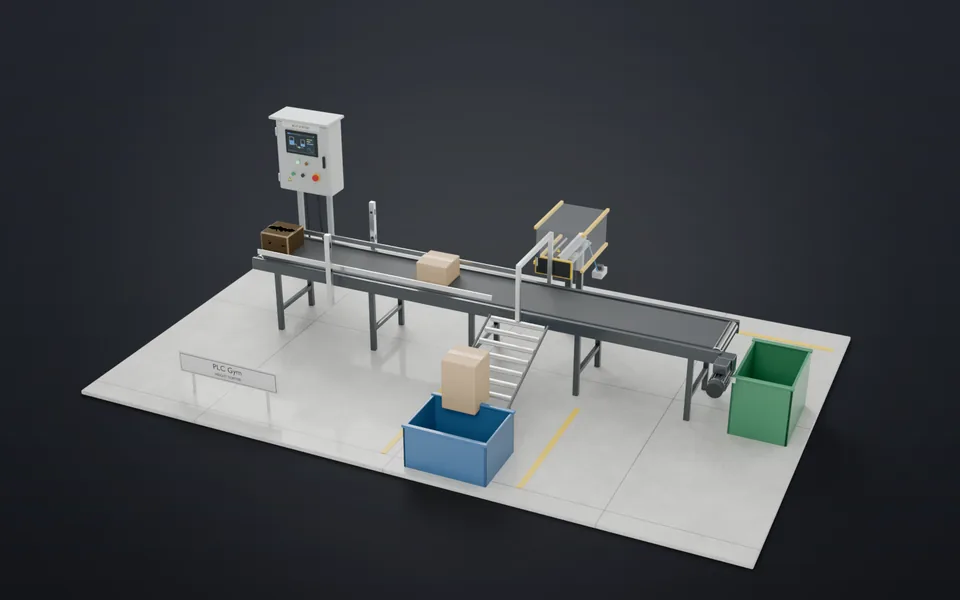 47Tall boxes off the lineRemember a box's height and push it at the right moment.Applied · 25 min · +300 XP
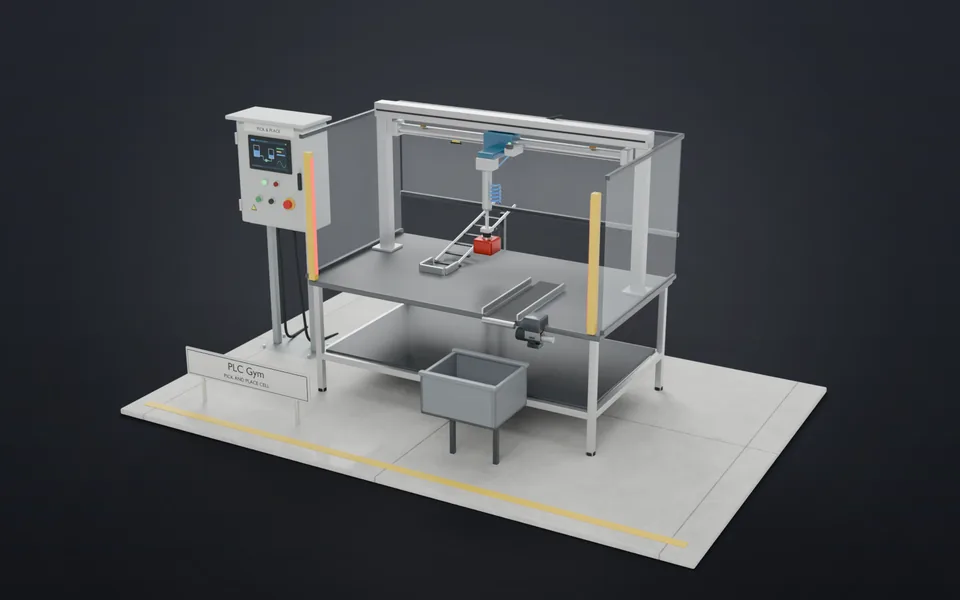 48Down, grip, up, acrossStep a pick and place through its sequence, every move confirmed.Applied · 35 min · +400 XP
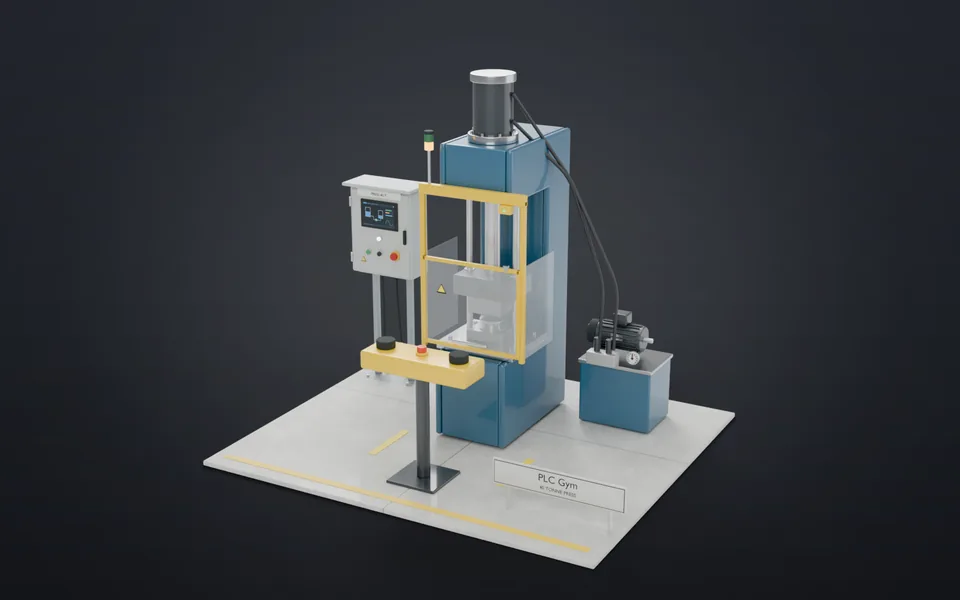 49Both hands, every timeWrite two-hand control for a press, with an interlocked guard.Applied · 30 min · +350 XP